

International research network “FlowCamp” aims to revolutionize energy storage by developing the next generation of redox-flow batteries
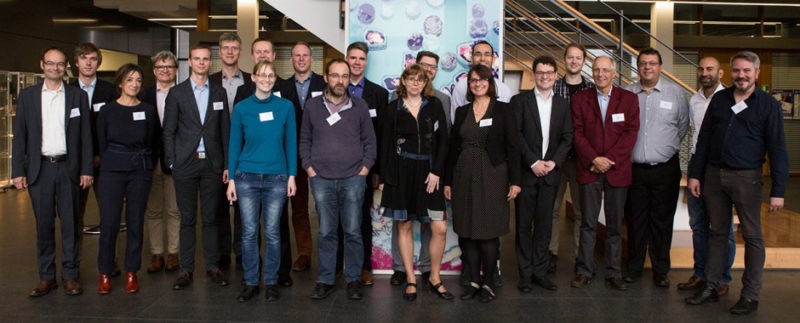
Partners in the FlowCamp network at the project kick-off meeting in September 2017: Fraunhofer ICT (DE), Elestor BV (NL), Bar Ilan University (IL), Hungarian Academy of Science (HU), CNRS (FR), JenaBatteries GmbH (DE), Amer-Sil S.A. (LU), Zürcher Hochschule für Angewandte Wissenschaft (CH), University of Chemistry and Technology, Prague (CZ), University of Stuttgart (DE)
Pfinztal, 22.09.2017 (PresseBox) – Renewable energy sources like wind turbines and photovoltaics need large-scale energy storage systems to balance out fluctuations in energy generation. One of the most promising solutions is redox-flow batteries. These systems store energy electrochemically, within liquid electrolytes that can be kept in tanks until the energy is required.
Redox-flow batteries are efficient (>75%), safe, and have a longer service life than conventional batteries such as lithium ion. Different combinations of electrolytes offer a range of advantages in terms of higher power or capacity and environmental compatibility. However, to fully exploit the possibilities, research is needed into materials (membranes, electrodes, electrolytes, catalysts and sealing materials) for the new battery systems.
Coordinated by the Fraunhofer Institute for Chemical Technology, and funded by the European Union’s Marie-Sklodowska-Curie programme, in the research network “FlowCamp” (MSCA-ITN-2017- 765289), 15 PhD students will develop materials for three next-generation redox-flow battery systems: hydrogen-bromine, aqueous organic and zinc-air flow battery systems. The team will also carry out simulation and modelling to guide the development and increase power output. Prototypes developed in the project will be tested using the cutting-edge facilities of the German-funded (19 million €) RedoxWind campus at Fraunhofer ICT.
Besides advancing the development of the new systems, FlowCamp will fulfil another important role: the combination of multiple disciplines (including electrochemistry, material science and engineering / system design) is essential to develop optimal battery systems, but at present few researchers have the necessary overview. The 15 PhD students in FlowCamp, who will start work in mid-2018, will gain a unique skill set through theoretical and practical work covering every aspect of system development, as well as training in transferable skills such as project management, which will prepare them for their future careers in the expanding field of energy storage.
The network offers the chance for outstanding graduates with the appropriate qualifications to participate in an international project with industrial and academic partners from Germany, the Netherlands, Israel, Hungary, France, Luxembourg, Switzerland and the Czech Republic. For more information about the project and the open PhD positions, please contact the project coordinators at the Fraunhofer Institute for Chemical Technology (ICT), Germany.
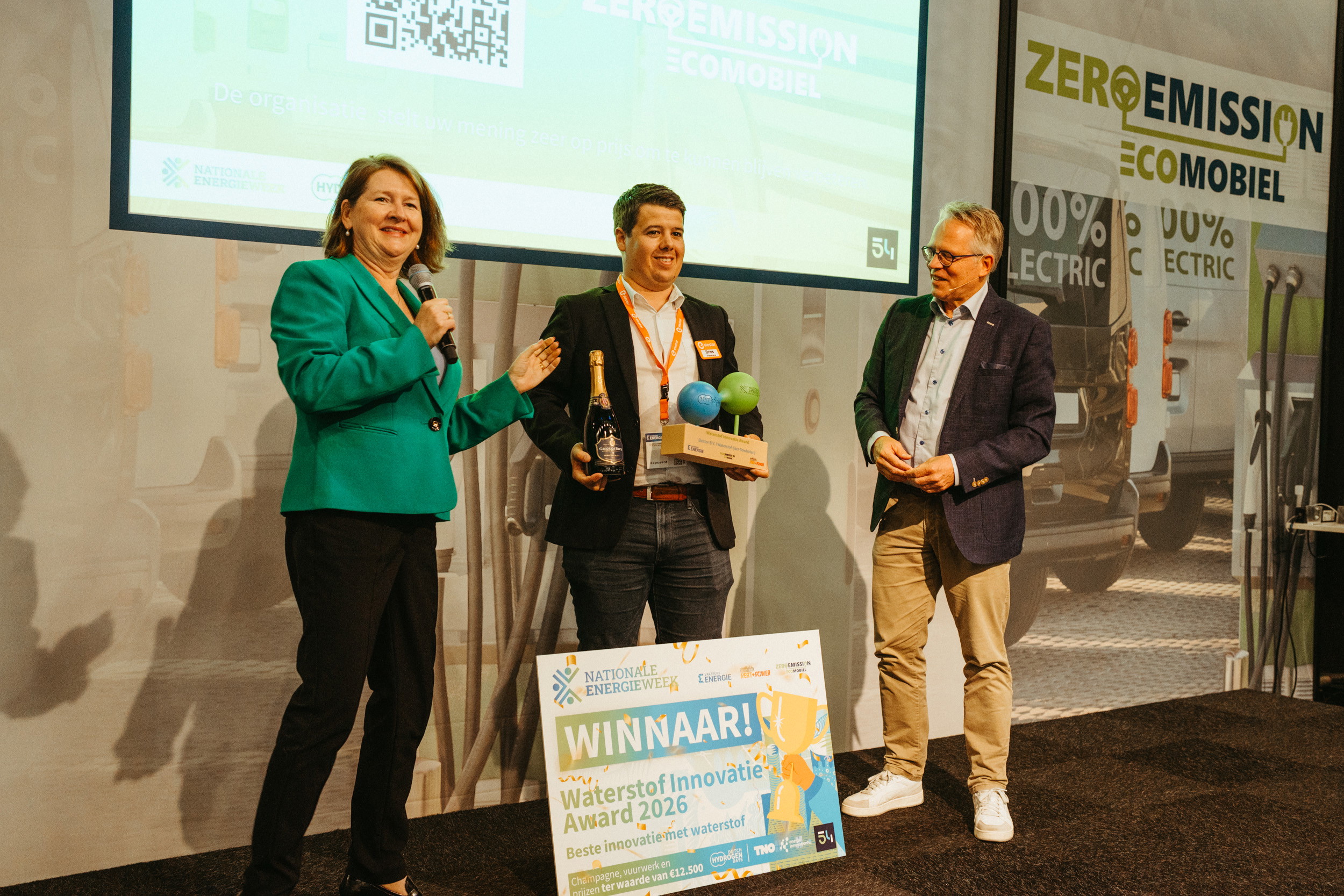
Elestor wins Hydrogen Innovation Award 2026
We are proud to share that Elestor has won the Hydrogen Innovation Award 2026 for our hydrogen–iron flow battery technology.
Read more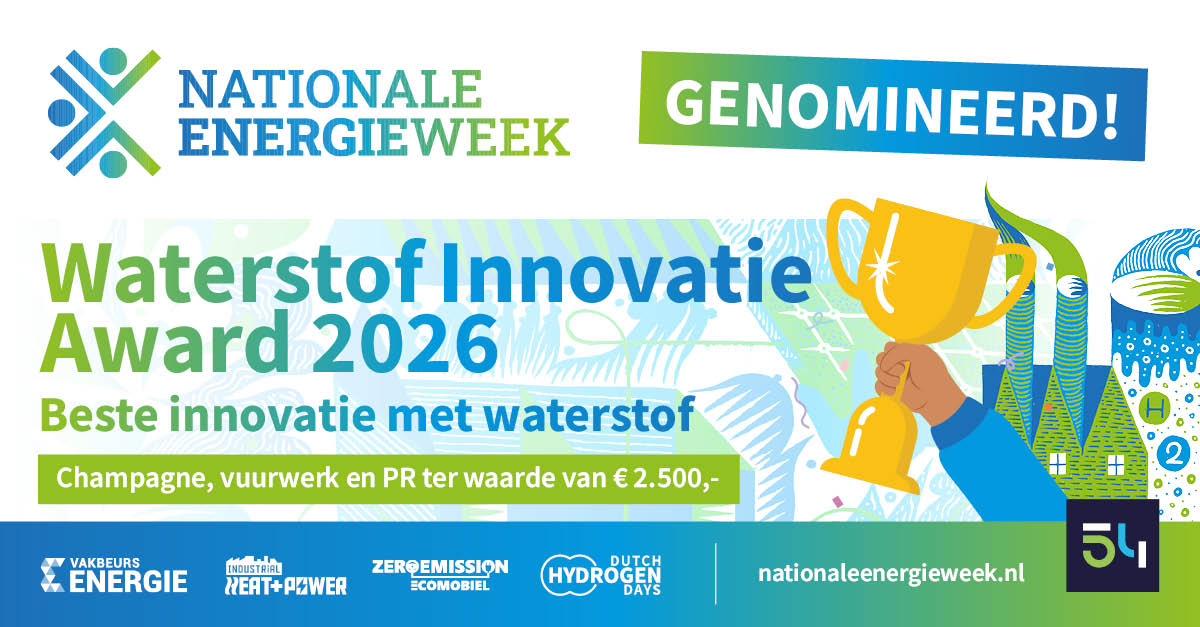
Elestor nominated for the Waterstof Innovatie Award 2026
We are pleased to announce that Elestor has been nominated for the Waterstof Innovatie Award 2026 with our hydrogen–iron flow battery technology.
Read more
Interview with EE Aktuell
In an interview with Erneuerbare Energien Aktuell, our CEO Hylke van Bennekom explains how Elestor’s hydrogen-iron flow battery is designed for long-duration energy storage, and why that becomes increasingly important as renewable energy grows.
Read more