
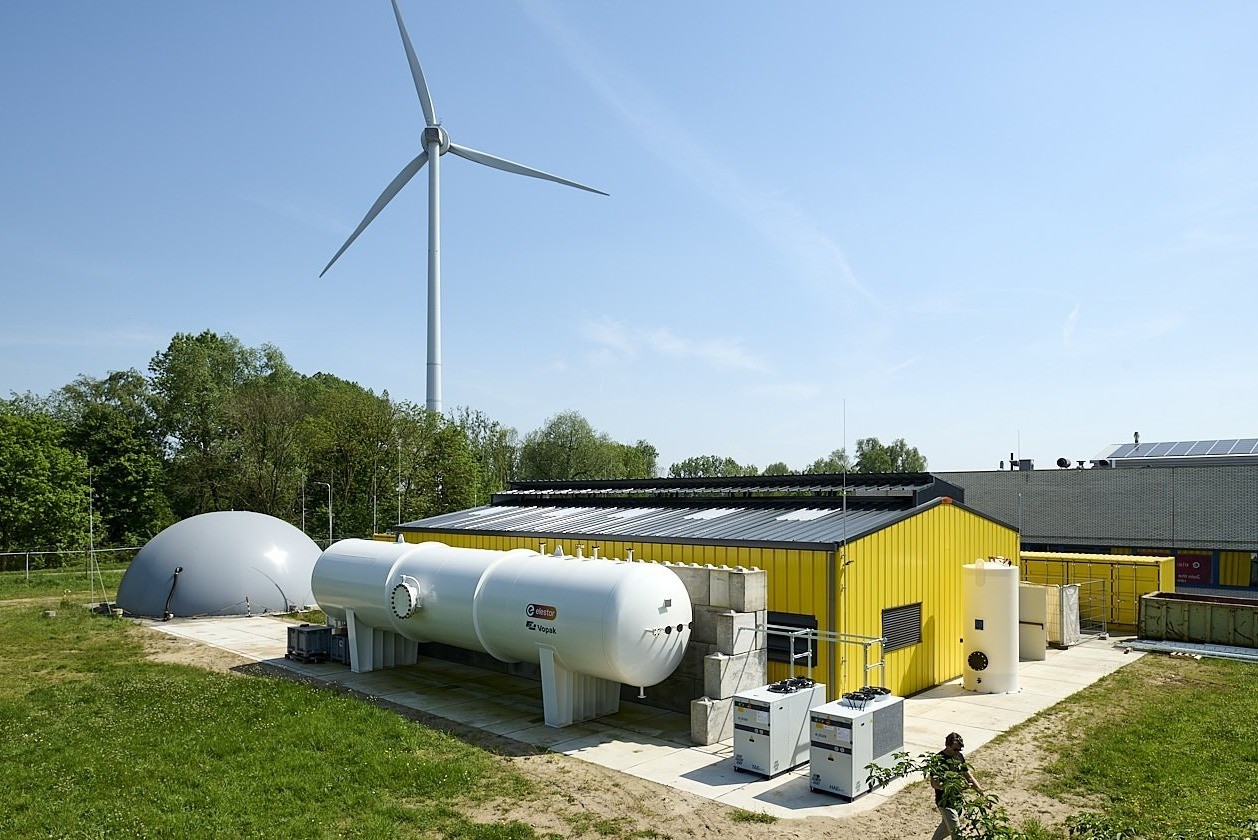
A Dutch battery developer, Elestor (based in Arnhem), claims a major breakthrough in large-scale energy storage. The company has published a report describing long-term testing of its hydrogen–iron flow battery under realistic operating conditions.
The results are striking: the battery can operate stably for tens of thousands of charge–discharge cycles, tt shows consistent performance over time, expected operational lifetime is 20–25 years in real applications. If these claims hold in practice, the technology could help solve one of the biggest challenges of the energy transition: affordable long-duration electricity storage.
Power and capacity can be scaled independently
Elestor’s technology belongs to the category of flow batteries, a type of battery in which energy storage and power delivery are physically separated. Instead of solid electrodes, as used in lithium-ion batteries, energy is stored in liquid electrolytes that circulate through an electrochemical cell.
The electrochemical stack determines the power, while larger electrolyte tanks can easily scale the energy capacity. Elestor’s system uses hydrogen gas at the anode and an aqueous electrolyte with iron salts at the cathode. Through a reversible chemical reaction between Fe³⁺ and Fe²⁺ ions, electricity can be stored and released.
Thanks to the materials used — water, iron, and hydrogen — the battery is also more cost-effective, sustainable, and less dependent on scarce materials such as lithium, cobalt, or vanadium.
Testing under realistic conditions
For the study, Elestor built an industrial-scale prototype. The setup consisted of a multi-cell stack, a hydrogen-fed anode, and a continuously circulating electrolyte system.
The tests were conducted under conditions that, according to the company, are comparable to real grid applications. These included elevated temperatures, long-duration cycling, and constant current densities. During the test period, data was continuously collected on parameters such as energy efficiency, internal resistance, and electrochemical stability.
Impressive results
The tests showed that the battery maintained stable performance over tens of thousands of charge and discharge cycles. Energy efficiency remained above 80 percent, while round-trip efficiency at the system level stayed above 75 percent. Moreover, no structural degradation was observed in the electrochemical core.
When performance temporarily declined, the system could be easily restored through so-called periodic conditioning. This involved operational adjustments, such as short rest periods or modified current profiles, without requiring any hardware replacement.
Interestingly, short pauses during the tests even led to a reduction in the internal resistance of the cells, suggesting that the materials partially reorganize themselves in a reversible manner during operation.
Storage costs around 2 cents per kWh
In addition to its impressive lifetime, the technology also offers clear economic advantages. Elestor estimates that the capital costs of the hydrogen–iron flow battery are around €15 to €17 per kilowatt-hour and even claims storage costs of approximately 2 cents per kilowatt-hour over its lifetime.
This makes the system an attractive alternative for large-scale grid storage. It can not only provide a stable energy supply, but also reduce costs and contribute to a more sustainable electricity grid—particularly important in an era where solar and wind energy are taking up an increasingly large share of our power supply.
Sustainable alternative with great potential
Long-duration energy storage is crucial for a future with a high share of renewable energy. Lithium batteries currently dominate, but they are expensive and dependent on scarce raw materials. The Dutch hydrogen–iron battery, on the other hand, offers a sustainable, low-cost, and scalable alternative that can keep the grid stable for decades, smooth peak loads, reduce dependence on lithium and cobalt, and increase the efficiency of solar and wind energy.
How quickly the technology will be deployed at large scale remains uncertain, but its potential for European energy networks is enormous.
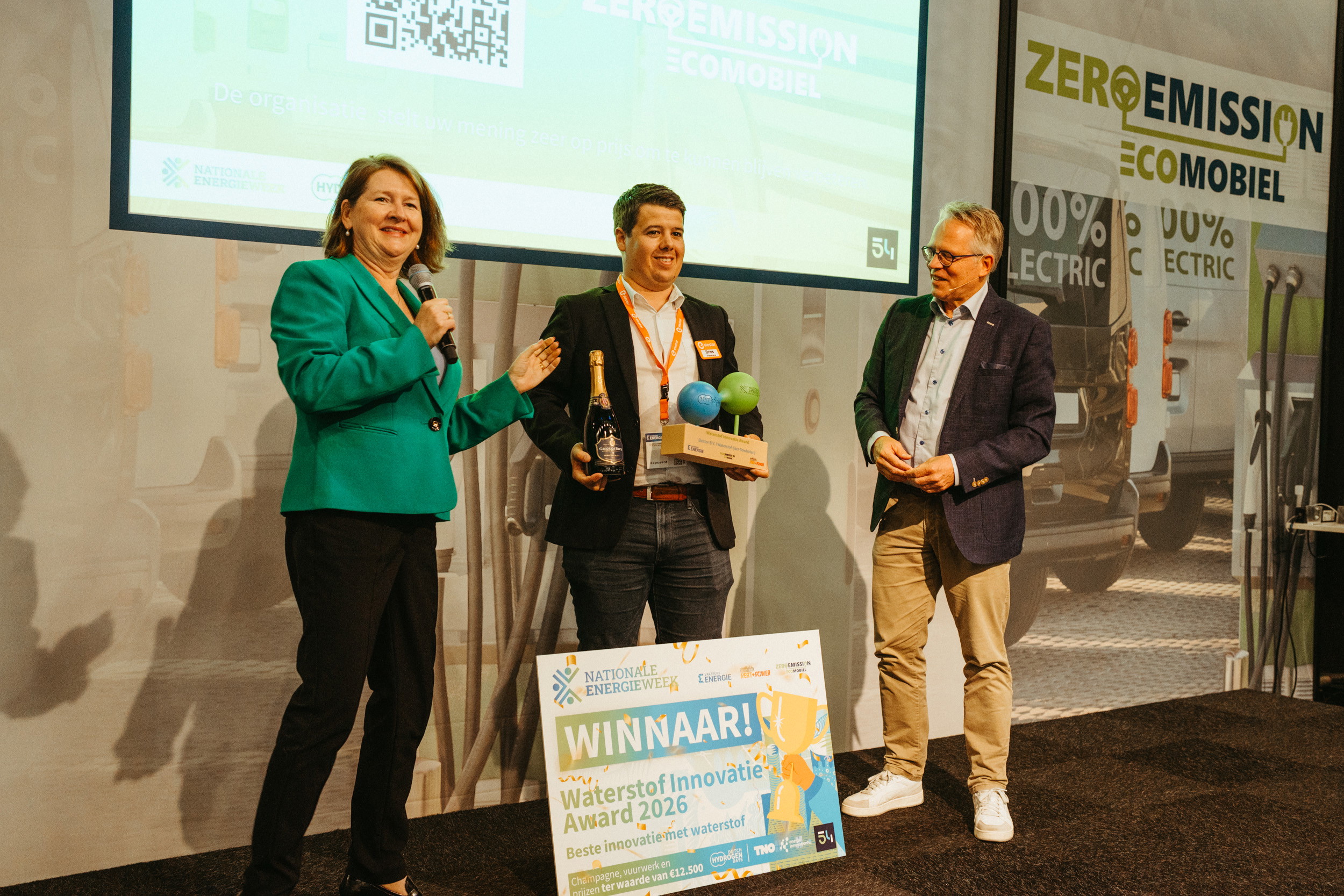
Elestor wins Hydrogen Innovation Award 2026
We are proud to share that Elestor has won the Hydrogen Innovation Award 2026 for our hydrogen–iron flow battery technology.
Read more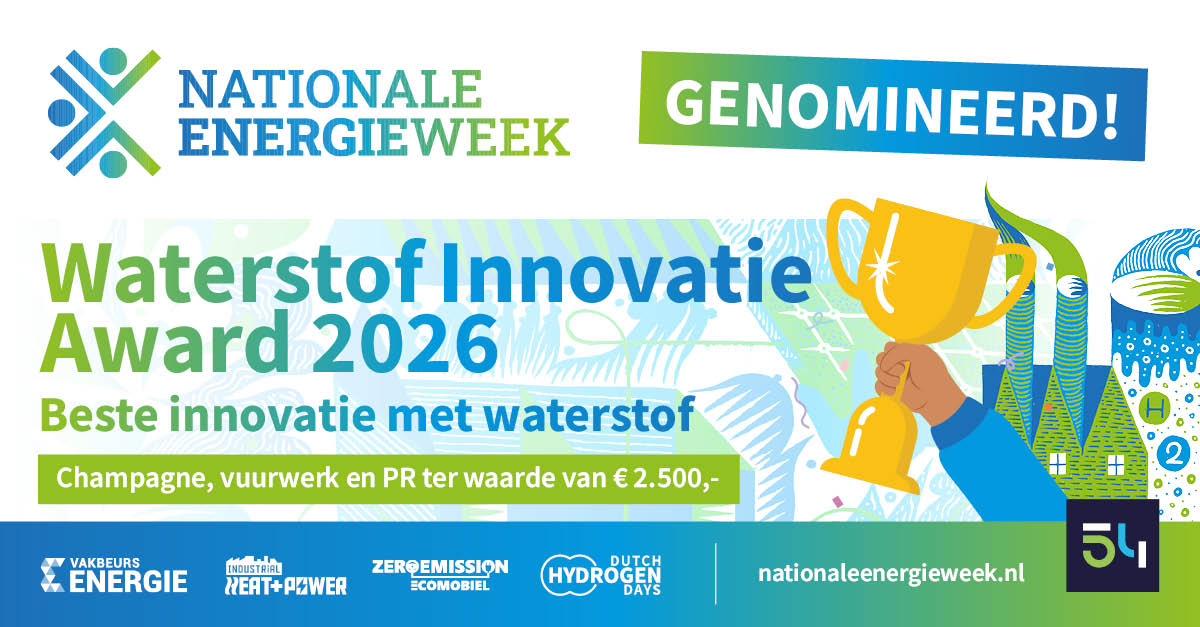
Elestor nominated for the Waterstof Innovatie Award 2026
We are pleased to announce that Elestor has been nominated for the Waterstof Innovatie Award 2026 with our hydrogen–iron flow battery technology.
Read more
Interview with EE Aktuell
In an interview with Erneuerbare Energien Aktuell, our CEO Hylke van Bennekom explains how Elestor’s hydrogen-iron flow battery is designed for long-duration energy storage, and why that becomes increasingly important as renewable energy grows.
Read more